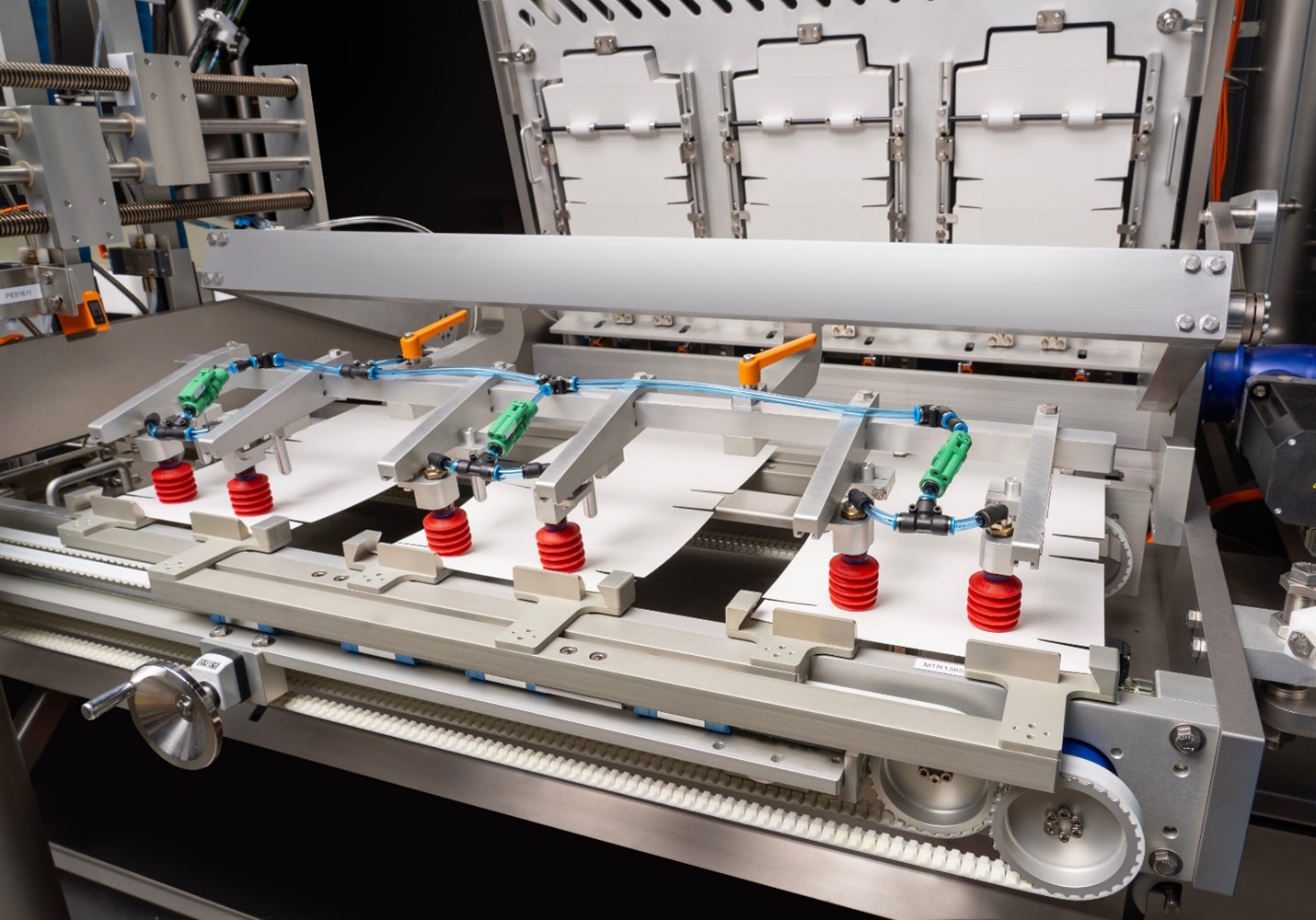
People imagine a robotic cartooning system running all day without attention. Reality feels different when cartons arrive slightly warped, or products vary by millimeters. The system still works, just not silently. Operators watch grippers hesitate, then recover. This is normal behavior, not failure. Carton loading depends on consistency upstream, which factories rarely achieve for long stretches.
Cartons are simple until they are not
A carton looks like folded paperboard; nothing complicated at first glance. During carton loading, small changes in glue seams or board stiffness cause misalignment. A robotic cartoning system reacts faster than humans, yet it cannot guess intent. Sensors detect presence, not quality. Poor cartons pass inspection and create jams later, usually during the busiest production window.
Speed settings shape everything else downstream
Speed adjustments look harmless on control panels. Increasing cycles per minute affects grip timing and release angles. Carton loading at higher speeds amplifies tiny positioning errors. A robotic cartooning system handles motion precisely, but products bounce, tilt, or resist gravity. Teams often slow systems slightly after chasing errors for hours without obvious mechanical faults.
Tooling design decides daily frustration levels
End effectors matter more than brochures suggest. Vacuum cups, mechanical fingers, and hybrid grippers behave differently. Carton loading improves when tooling matches product weight and surface texture. A poorly chosen gripper causes drops that look random. Even the best robotic cartooning system struggles with tooling designed for a different product that marketing quietly approved.
Integration exposes weak points quickly
Robots rarely work alone anymore. Conveyors, erectors, and sealers must stay synchronized. Carton loading fails when timing drifts between machines. A robotic cartooning system may pause correctly, while upstream equipment keeps feeding. Communication delays create piles of product nobody planned for. Engineers then adjust signals instead of replacing machines that still function adequately.
Maintenance hides in small daily habits
Robots appear clean, yet dust settles everywhere. Sensors cloud, suction lines clog, and joints wear slowly. Carton loading accuracy drops gradually, not dramatically. A robotic cartooning system rarely announces maintenance needs clearly. Teams notice through increased stops and quieter complaints. Regular checks reduce surprises later, even when production pressure tempts shortcuts.
Operators influence robots more than expected
Training manuals explain steps, not instincts. Experienced operators hear rhythm changes before alarms trigger. Carton loading improves when operators trust observation, not just screens. A robotic cartooning system responds immediately to parameter changes, which makes restraint valuable. Over adjusting creates new issues. Patience becomes an operational skill learned over months, not days.
Choosing automation with realistic goals
Selection decisions benefit from honesty. A robotic cartooning system fits medium to high volumes with stable product presentation. Carton loading flexibility depends on tooling change time and software support. Budget discussions should include service access and spare parts. Testing with real cartons and products exposes limitations early, before installation dates create urgency.
Conclusion
A robotic cartooning system brings structure and repeatability, but it still reflects its environment. Carton loading performance depends on carton quality, product behavior, maintenance habits, and operator awareness. Robots reduce manual effort, not responsibility. Understanding their limits helps teams manage downtime and expectations. Instead of chasing flawless automation, aim for stable operation and informed adjustments. If your facility is evaluating cartooning automation or refining an existing line, consult an experienced packaging automation professional. A practical assessment of your products, layout, and production goals supports smarter decisions and smoother long-term operation.