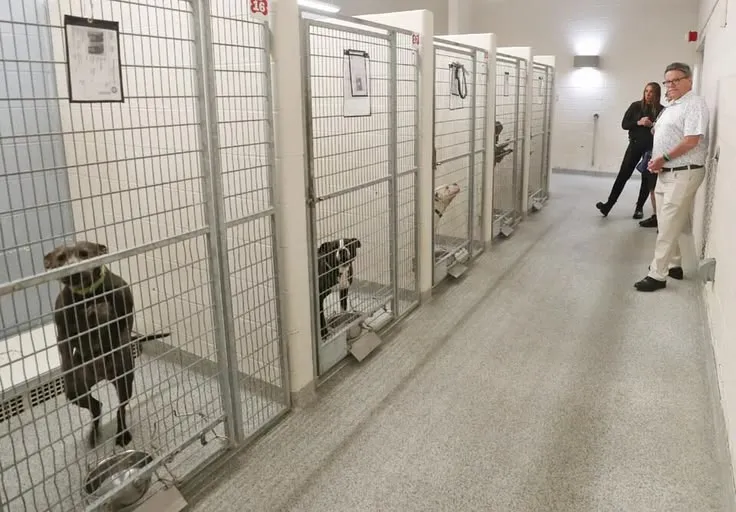
Animal shelters operate differently from many veterinary clinics or boarding facilities. Dogs and other animals may arrive unexpectedly, kennel occupancy can change several times in a week, cleaning happens continuously, and staff frequently move cages, supplies, food, and equipment between areas. These conditions put unusual pressure on the floor. A surface that is difficult to sanitize or absorbs moisture can quickly increase maintenance demands. For busy shelters, flooring decisions should therefore consider hygiene, odor control, animal traffic, cleaning frequency, and long-term durability together.
Frequent Turnover Increases Cleaning
A kennel may need to be cleaned thoroughly whenever an animal leaves and before another occupies the space. In high-turnover facilities, this process can occur repeatedly throughout the day. Water, disinfectants, animal waste, food, and cleaning tools all contact the floor during these cycles. Surfaces with numerous joints, porous areas, or damaged sections can require more effort because contaminants may collect in difficult-to-reach locations.
A seamless flooring system can make these repeated sanitation routines more manageable by reducing places where moisture and debris accumulate.
Porosity Can Contribute to Odor Problems
Bare or deteriorated concrete is porous. When protective surfaces fail, liquids may penetrate rather than remain entirely on top of the slab. In animal-care environments, this can become particularly important because waste and contaminated wash water may contribute to persistent odors if they reach porous materials.
Facilities evaluating a professional Kennel Flooring Service should therefore consider whether the existing substrate has absorbed contamination over time. Resurfacing should address damaged or unsuitable concrete rather than simply hide staining beneath a new coating.
Claws and Equipment Create Wear
Animal traffic is only one source of mechanical stress. Shelter staff may also move cages, carts, cleaning equipment, food containers, and supplies through the same corridors every day. Kennel gates and movable fixtures can create localized impact, while active animals repeatedly scratch or turn on the surface. Doorways and intersections often receive especially concentrated traffic.
Managers should identify these high-use routes during renovation planning so the condition of the concrete can be assessed more carefully in those locations.
Slip Resistance Must Remain Comfortable
Kennel flooring needs sufficient traction for both employees and animals, particularly after washdowns. However, extremely aggressive texture can create other problems. A very rough floor may require more scrubbing and can be unnecessarily harsh for animals that spend substantial time walking or lying on the surface. A finish that is too smooth may be less practical when wet.
When specifying a Kennel Veterinary Flooring Coating, facility managers should balance traction with animal comfort and cleaning requirements rather than selecting texture based on a single priority.
Wall Connections Affect Sanitation
Open floor areas receive most of the attention during renovation, but kennel perimeters can create significant cleaning challenges. Sharp corners where floors meet walls may collect hair, residue, and moisture. Integrated cove-base details can create curved floor-to-wall transitions, allowing sanitation teams to clean the perimeter more effectively.
Partitions, posts, and kennel gates should also be considered. Where practical, improved access during installation allows contractors to prepare and detail the surrounding concrete more consistently.
Chemical Resistance Matters Daily
Shelters often depend on frequent use of detergents, disinfectants, and other sanitation products. These substances may contact the flooring far more often than chemicals would in a typical office or retail setting. Managers should provide contractors with information about their routine cleaning products and procedures before the system is selected. The coating should be compatible with realistic sanitation practices.
Prompt rinsing and correct chemical dilution remain important even when the flooring system is designed for demanding animal-care environments.
Renovation May Need Phasing
A busy shelter may not have enough temporary space to close every kennel simultaneously. Flooring work may therefore need to be completed in sections.
Animals can be relocated from one zone while concrete preparation, repairs, coating application, and curing take place. Once that area is ready for use, work can move to another section.
The schedule should provide enough time for each phase rather than reopening prematurely simply because demand for kennel space is high.
Inspect High-Use Areas Regularly
After installation, maintenance teams should focus inspections on kennel entrances, drains, wall edges, corridors, gates, and equipment routes.
Small chips or scratches may be easier to repair before repeated washdowns and animal traffic enlarge them. Staff members performing daily cleaning can be particularly useful in identifying early changes because they see the surface more frequently than facility managers.
Conclusion
High-turnover animal shelters need flooring that supports constant sanitation, changing occupancy, animal movement, and intensive daily maintenance. Odor control, chemical exposure, traction, concrete condition, and repeated equipment movement all influence how effectively the surface performs.
A successful flooring strategy begins by studying the way the shelter actually operates. Seamless design, proper substrate preparation, suitable texture, thoughtful perimeter detailing, realistic installation phasing, and regular inspections can create a more manageable environment for employees while supporting cleaner, safer spaces for the animals moving through the facility.